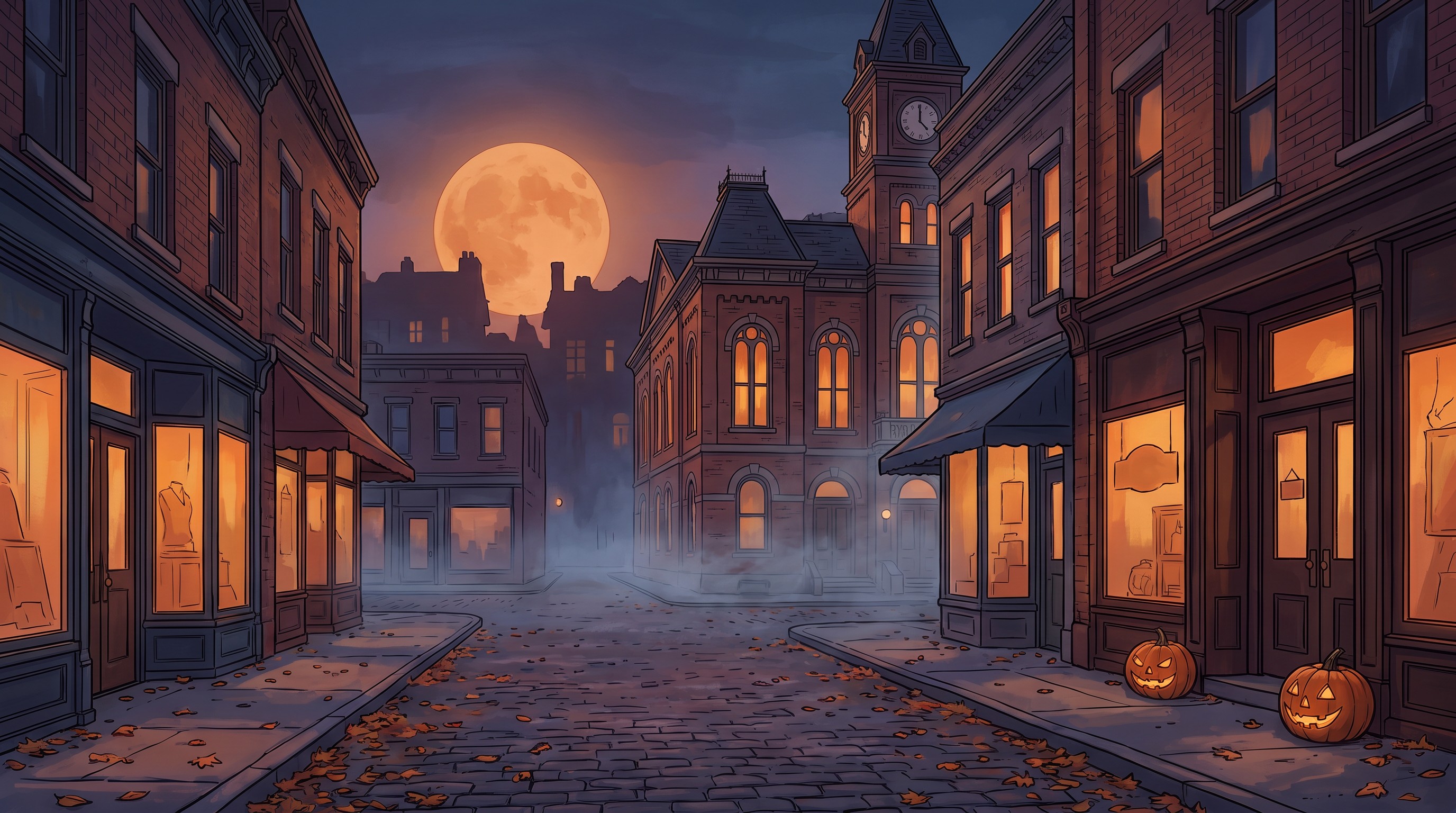
Retail real estate runs on traffic. Some places have pulled crowds for generations, and a few have picked up a ghost story or two along the way.
Chicago's own shopping story started on Lake Street, the city's major shopping district in its early years, before Potter Palmer began turning State Street into the new retail center in the 1860s. Since then, the region's stores and main streets have collected plenty of lore. Here are four places where the past still shows up for business, with legend and fact clearly labeled.
The mall where some guests never checked out
In 1914, in Alton, Illinois, the Luer brothers, meatpackers by trade, set out to build an ice warehouse. According to the local tourism bureau, they struck a natural spring while digging in the bedrock, and changed plans.
The result was the Mineral Springs Hotel: five stories, more than 100 rooms, bathing pools, spa rooms and a bottling plant that shipped “curative” water to 12 states. The hotel even claimed the largest swimming pool in Illinois.
It faded in the 1960s and closed in 1971. In 1978, Roger Schubert restored the building and turned it into a shopping mall. Today independent shops share the halls, and the restored ballroom hosts weddings and, yes, paranormal evenings.
According to local lore, some of the old guests never left. The best known is Mary, the “Jasmine Lady,” said to have died after a fall on the stairs, whose floral perfume visitors report smelling in the hallways. Shopkeepers talk about Pearl, who supposedly prefers the company of women. And there's Clarence, a young man who drowned in the pool. His death is one of the few actually on record at the hotel, and his death certificate is displayed in the lobby.
Elvira's seat on the square
Woodstock, Illinois, has one of the region's great small-town squares: brick-paved, lined with one-of-a-kind shops and restaurants, and home to the 1800s-era Woodstock Opera House.
The Opera House also has a ghost with strong opinions. According to local theater lore, Elvira was a young actress who was passed over for a leading role and, as the story goes, met a tragic end in the building. Her favorite seat is DD113. Staff and visitors have reported the spring-loaded seat lowering on its own, and some say she sighs during weak performances.
To be clear, there's no historical evidence behind the tale, and no record of any such death at the Opera House. That hasn't stopped Woodstock from embracing her. When Halloween shows came to the Opera House in 2023, her seat was kept off the reservation list, with a contest to decide who would sit in it.
From bomber engines to a shopping center
Ford City, on Chicago's Southwest Side, may have the most unusual résumé of any shopping center in the region.
After Pearl Harbor, the country needed engines for the B-29 bomber, fast. A 19-building complex designed by Albert Kahn went up near 76th and Cicero starting in June 1942, and over the course of the war the plant produced more than 18,000 B-29 engines.
After the war, Preston Tucker took over the plant to build his famous Tucker automobile. Only 51 cars were made before an SEC investigation cost him his company. Tucker was cleared of all charges in 1950. Ford later reopened the plant to build aircraft engines during the Korean War, and it closed in 1959.
In 1961, the government sold the site to developer Harry F. Chaddick, who demolished some buildings for parking and remodeled the rest into Ford City, which opened in 1965 with three department-store anchors. Tootsie Roll moved into part of the old complex in 1967, and candy is still made there.
A legend in the foundation on Wabash
At 15-19 S. Wabash Ave. stands an 1882 building by Dankmar Adler and Louis Sullivan, built for Martin L. Ryerson, a Michigan lumber baron turned Chicago real estate investor. WBEZ calls it the oldest building in Chicago showing Sullivan's signature floral ornament.
The legend is underground. A plaque says Ryerson built on a stone foundation that predates the 1871 fire. That's plausible, but unconfirmed.
The tenant history is pure Chicago. The family behind Iwan Ries & Co., a pipe and cigar shop founded in 1857, bought the building in 1967. Upstairs, over the years, came printing companies, a sound studio and The Millionaires Club, whose 1970s wood-paneled lounge lives on in the shop's cigar lounge. A rehab of about $7 million, partly funded with historic preservation tax credits, uncovered stained glass hidden behind drywall.
Shoppers come for the stores. They come back for the place. A good story, a beautiful old storefront, even a friendly ghost, all help a retail property stay relevant for a century. Own a shopping center with a past? Tell us about it at investment@kwcommercial.com.